Showing posts with label heating. Show all posts

Friday, May 5, 2023

Infrared Heating: Introduction

Edmonton Homeowner’s Guide to Infrared Heating

During the onslaught of a frigid Edmonton winter, it is imperative to come up with an alternative or a backup heating system just in case your furnace goes bonkers in the middle of the night. One of the most affordable and efficient sources of additional heat is infrared heating. But you cannot easily head to your nearest Edmonton hardware store to buy their on-hand infrared heaters without first knowing the model that you can afford and knowledge of the wide array of selections to choose from. The following will give you a glimpse of the various infrared heaters out there.

NEAR INFRARED

A common Edmonton infrared heater is the “IRA” or near infrared. They happen to be bright and illicit short waves. Heat lamps like this one can generate temperatures around 1300 degree Celsius. It can go higher with the addition of the red light that is also deep and visible.This device has a quartz emitter that has a reflector and keeps the heat’s concentration in just one part of the room. You can also use fuel to power this kind of heater, or perhaps utilize natural gas or propane. The fuel heats up a steel tube that glows, becomes very hot and generates the necessary infrared heat.

However, an infrared is not advisable for human use unless its position is some distance away.Having a device that generates 1300 Celsius is simply too hot to be anything but comfortable. When such a device comes near humans, you can experience a list of health complications that do not limit itself to dry eyes, headache, bleaching of your iris, and a lot more. If you expose yourself to near infrared heat for a long time, it is proven to damage your skin as well as your eye tissues. Other kind of heaters,like the far and medium-wave infrareds, show no undesirable effects.

And since near infrareds have such deep permeating effects, it has some proven benefits in the fields of health and medicine too. But despite that, the experts only recommend using near infrared heaters in brief doses, and you must wear heavy duty eye protection to limit its adverse effects in you. It has also been effective in treating some skin conditions, and you can use a variant of near infrared heaters as a night vision goggle.

Going back to its disadvantages, it has a shorter life span than the remaining two types of infrared heaters. It relates to human’s wrong way ofusing it when they utilize it to produce heat in a public place, like a tailgating party outside that makes it tubes and bulbs cycle far too often. If these heating components always turns on and off, they’ll likely break down sooner, Quartz and similar infrared heaters are more useful in circumstances like this.

MEDIUM INFRARED

Another kind of infrared heater is a medium infrared heater. It is capable of producing a much lower temperature than a near infrared, which is only around 500 up to 800 degree Celsius. You can usually come across this kind of radiation amidst industrial processes since it is perfect for smelting or even other glass blowing purposes. It is interesting to note that the medium infrared heater is the same kind of light that heat seeking missiles are after when detecting the exhaust fumes of another aircraft.

A medium-wave infrared heater’s components are quartz or carbon and are primarily useful in obtaining operating temperatures faster than other variants. A wavelength application comprises of manufacturing like curing glues and even the welding of plastic, curing a print toner, coat a PVC pipe, in grilling and preparing food.

In public places, a medium infrared heater heats up both commercial and public places. Just like a near infrared’s use in heating up tailgating parties in outside venues, a medium–wave infrared is an affordable alternative. You can put these medium infrareds much closer to people, aside from being highly efficient when it comes to energy consumption. The heat it generates is far less potent than near infrareds and does not put the health and well-being of the general public at high risk. So, you have the assurance that your eyes and skin is safe around medium infrareds. Lastly, you also no longer have to contend with the bright red light near infrareds are associated with.

FAR INFRARED

Edmonton far infrared heaters or IRC or long waves work best at wavelengths of around 3,000 nanometers. This type of infrared heater is favored by most Canadians since they work at a much lower temperature, around 100 degree Celsius and minus the visible red light as well. The components of far infrareds are nickel and ceramic, which are both long lasting.

Because of their significant lower temperatures, they are perfect for Edmonton homes, commercial, and even public heating. This technology is present in state-of-the-art saunas since it is capable of generating heat to make you sweat but low enough to keep you comfortable.

Its 100 degree Celsius temperature is significant among infrared panels since it allows it to function at a low temperature,and you can enjoy the benefits of saving energy offered by this type of technology. If a certain panel is much higher than 100 degree Celsius, it does not have the same low watt input that is fundamental among energy efficient far infrared heaters. Hence, some panels in the UK needs adjustment or else they will consume more energy in contrast to its description in the box. But for the rest of Canada and US residents, they can utilize their far infrareds as soon as they take it out of the box.

A SIMPLE GUIDE TO HELP YOU DETERMINE THE BEST KIND

Now that you are fully aware of the fundamental concepts of the three usual kinds of infrared heaters, it is the perfect time to determine what model is perfect for your needs. For example, if you own a:

  • Big open space to heat, be it inside the house or outside;
  • Not used that often, hence its constant cycling does not shorten its life;
  • Have enough space to store the unit out of reach of anybody, or mounted somewhere far off;
  • The risk of exposing your eyes or skin for a long time.

Thus, you are looking for a near infrared. It is a common apparatus among saunas, or you can opt to put it in your barn or shed. But if you:

  • Have a big open place to heat;
  • Frequently use the heater, results to frequent on and off cycling;
  • No space to mount it somewhere far from crowds, but close enough for access.

You will greatly benefit from a medium-wave infrared heating. They are also perfect for similar places like sheds and barns but differs in a way with its frequency of use. For instance, garages or body shops. Lastly, if you have a typically small place to heat and ensure that your heater is close enough to people, a far infrared heater is what you are looking for. These are the ones that are common among Edmonton homes.

https://air-conditioning-edmonton.ca/infrared-heating/

3 Main Central Heating Systems

When the first central heating system was introduced it literally revolutionized home comfort levels when the first one was installed many years ago. It took having to heat different areas around the house in different ways to entire home heating now being controlled from one convenient central location. As with any good discovery, it was then improved and perfected over the years to the efficient and state of the art systems that are being installed today. Here are some of the different types of central heating systems available today.

Central Heating System Types

1. Wet Heating System

Wet heating systems have water pass through a heating source and then distribute the heat throughout a house through piping. Most typically this piping is laid under the floor of a home or apartment or the heat can be distributed through the means of radiators spread throughout the home. It produces heat through convection so the heat is distributed evenly throughout the space in a room.
This type of central heat system usually uses gas or oil as a heating source and in very rare cases, depending on the local supply, they can use wood chips or coal pellets as the heating source too.

They work by means of a boiler system or a combo-boiler system (which gives them the advantage of taking up less space and heats the water in the home too). These are very popular throughout Europe.

2. Forced Air

These are systems that heat the air that is passed through them and then that air is circulated throughout the home by means of a fan in combination with ductwork that goes to each room. This process can be done by using electricity, natural gas, oil or any other type combustible material if set up properly.

A forced air central heat system has the advantage of being able to have an air conditioning unit attached to it also as the existing ductwork provides a means to distribute the cooler air too. They remain among the most popular heating options in North America and their efficiency has improved greatly over the last decade (nowadays they are typically in the 85% - 97% efficiency range).

3. Heat Storage

This type of central heat system can be very economical if the owner of it lives in an area where electricity is cheaper at night and off peak hours. They are able to distribute heat long after the initial heating process takes place because the system uses bricks to capture the heat produced and then store it for a long time.

The system controls the heat through central wiring controls hooked to thermostats that control when and how much of the stored heat is released. They will typically have a cistern built into them which also heats the water in a home too. They distribute the heat through radiators that have the capability to supplement the stored heat with the use of instant electrical heat if necessary. These are the least popular of all the central heating system.

No matter what system a person chooses for their individual needs each type of system has its purpose and will work well for them.

https://air-conditioning-edmonton.ca/central-heating-system/

In Floor Heating Introduction

Your Edmonton Guide to In-Floor Heating

There is nothing more terrible than walking on your cold floor early in the morning. It will shake you up, confuse, and annoy you right after waking up. You can try to remedy such circumstances by wearing more socks than usual, or laying blankets all over the floor in anticipation.

The most convenient remedy to cold floors might already be staring you in the face. Or perhaps, it is somewhere below your line of vision. Edmonton in floor heating seems extravagant but it is affordable and highly energy efficient. For those Edmonton homeowners who are not yet familiar with in-floor heating or perhaps shopping for their next home heating alternative, here is a short introduction.

HOW IN-FLOOR HEATING WORKS?

The installation of an in-floor or underfloor heating system in your home requires the installation of water heated pipes or perhaps electric heating coils below the floors of your home. The usual kind of flooring related to radiant heat is tile. But then, there are certain systems that incorporate laminate or hardwood flooring, or even a carpet. And since heat goes up, it is not only the coils or tubes underneath your floor heat up your feet or toes, but your entire room alsoheats up as if you are using radiant heat. To know more how in-floor heating works, take a look at a furnace that only generates heat out of a register and ends up circulating inside the room. With an Edmonton radiant heating system, your floor becomes one big vent. This method is not new since Europeans prefer this kind of heating as early as the 1970s. They adopted this practice from the early Romans who utilized heated pipes to make their floors warm.

VARIOUS KINDS OF IN-FLOOR HEATING

Even if there are several kinds of flooring put above in-floor heaters, there are only three types of heating systems:

  • AIR HEATED FLOOR SYSTEM –this kind of in-floor heating system is not a practical choice for most Edmonton homes since the air is not a good heat conductor.You’ll realize that air heated in-floor heating is not common because it is pricey to install and operate. But you can make it more cost-effective and practical if youpair it up with solar air heating systems. However, it only allows you to generate heat during the day. But it is important that you are aware that such an alternative exists.
  • ELECTRIC RADIANT FLOORS –this type of in-floor heating is more common because you can directly connect it to your home. It also spells convenience since you can control it using the same power circuits as your fans, lights, and several other appliances. This kind of radiant floor heating comprises of mounted cables below your floor or underneath your actual floor that is being covered by mats of electrically conducive plastic. Maybe the best advantage of radiant floor heating is also its biggest flaw, the capacity to connect with your home’s power circuits can drastically increase energy bills.
  • HYDRONIC RADIANT FLOORING –this happens to be the most prominent and cost-effective radiant flooring model. This system utilizes a boiler pump that heats water that passes throughtubes set below your floor. Hence, it manages to create a warm surface and temperature in your room.

AFFORDABLE INSTALLATION

To a lot of Edmonton homeowners, the cost of installing a heating system below your floor is beyond their capacity. The truth is; most of them do not research about this option and just goes with the common concept that it is a pricey investment. You can usually expect such methods that improves the comfort of your home and can significantly lower your monthly utility bills to come with a big price tag. In contrast, installing an in-floor heating system fits most homeowner’s budget. You can safely assume that your in-floor heating installation will cost you around $3 per square foot. But it all varies on the size of your house and the kind of underfloor heating system you plan to install. All in all, you might have to shell out around $5,000 up to $14,000 to cover the size of your home. But if you want to start small, like your bathroom perhaps, you’ll likely spend less than $700 for the entire project. But you must take into consideration though that such an installation will significantly lower your monthly heating bills, especially during winter. Best of all, you no longer have to do tedious floor heating upkeep once you make the shift.

IN FLOOR HEATING CAN LOWER ENERGY BILLS

You’ll also feel more comfortable with your radiant heat installation when the weather becomes unusually cold. That means you can manage to get by even with lower thermostat levels. Your whole body feels warmer even though your furnace’s performance stays the same because it delivers heat through your entire floor. It is undeniable that an in-floor heating system increases your energy bills, but you can save fuel and energy with a hydronic system. Also, if the entire expanse of your floor serves as your radiator, you’ll only require a lower water temperature.Hence,your boiler will live longer since it no longer has to work so hard.

THE NO-MAINTENANCE METHOD

The best thing about radiant floor heating, depending on the kind that you use,is its almost no maintenance feature. In essence, it is a closed system that manages to keep you warm for a long time. It is true that the pipes in your hydronic units will likely be victims of corrosion. However, it is a clear warning sign that your unit is no longer close, but now an open system. Hence, it is high time you take it to an Edmonton HVAC contractor and let it undergo the necessary checkup and repairs. Just like any other pump as well, its valves may get broken,and it’ll likely experience a list of other issues. Just bear in mind that it mostly involves your pump and not the flooring itself.

CONVENIENCE

The comfort a radiant floor offer is incomparable. Add to that, it also does not need any maintenance, and even lowers your monthly utility bills.While you snuggle in your couch as you watch a good movie late at night, think of all the heat you lose as this hot air makes its way from the vent until it gets to you. Whereas, think of how warm you can get if the heat that circulates in your home comes from the floor instead.

As you consider in floor heating, maybe it is also the perfect time to ask the advice of a certified HVAC expert. As previously mentioned, its advantages are far much more than having a warm surface to step on in the morning, or enjoy having lower energy bills from then on. It will also warm up your home like no other heating system can, and let you enjoy your life without constantly worrying about heating maintenance and repairs. You can now be thankful that you are aware of in-floor radiant heating and is now reaping its benefits.

https://air-conditioning-edmonton.ca/in-floor-heating/

The Many Hats that HVAC Contractors Wear

Most people have trouble learning one job well in their lifetime let alone adding one or two more different tasks to their work regimen. Think of how HVAC contractors must feel with all the different types of jobs they have to know about in order to get their job done. Here is a sample of all the different types of knowledge you are getting when you open the door to greet your local HVAC contractor for a service call.

PR Specialist

You will notice this the pleasant way they greet you when first meeting. There is no person to do the introduction for them so they will take it upon themselves to greet you and then listen to your concerns so they can get your HVAC problems worked out.

Inspector

HVAC contractors do not just show up and start to take things out and replace them. They will first have to carefully diagnose the problem and then tell you what is involved in that type of work and if the parts are available now or they have to be ordered. If you are like most people you will also want an estimate of the cost of the repairs.

Salesman

Once you have your estimate the HVAC contractor will next have to convince you that it is in your best interest to get the work done and that they are the right person to do the job for you. They will also talk to you about what is involved in the repair you need, the quality of the parts they will be using and what warranties come with the job.

DURING THE WORK IN PROGRESS

Once the work starts then you will really see how well rounded the knowledge base is for HVAC contractors.

Electronics technician

They will first start the repair by turning off the system. If the repair involves the sophisticated electronic controls they are able to diagnose where the problem lies. They also have to have at least a basic knowledge of how electricity flows and works and most importantly how to safely work around it.

Mechanic

If any parts need to be changed out on the system they can handle it because they possess a large amount of mechanical knowledge. They can swap out broken parts and replace such things as fan motors and condenser units.

Plumbing and Gas Specialists

There might be both plumbing connections and gas connections too that are part of your central air heating and cooling system. Your HVAC contractor will know all about doing such things as fixing leaks and getting out clogs in the lines of both these types equipment.

WHEN THE WORK IS DONE

Accountant

When the work is done there will be the matter of the bill and by now it is probably no surprise to you that your HVAC contractor can skillfully handle that too.

Of course once the work has been done and the bill paid, good HVAC contractors will once again use there PR skills to thank you for the business and wish you a good day.

https://air-conditioning-edmonton.ca/hvac-contractors/

How to Buy a Furnace

Tips on How to Buy a Furnace

Many people like to relax at their favorite mall or outlet. Unfortunately, buying a new furnace is not very relaxing. So how do we make sure that we get the best value for our dollar? The following five points will help you how to buy a furnace within your budget, and have it installed before the winter hits.

MAKE YOUR OWN ASSESSMENT

Make sure to conduct your assessment before you even start to look at a furnace’s fan speed or energy rating. You’ll know then if it is ripe to purchase a new furnace. In the next few months, will you stay mostly at home? Can you just have it repaired, rather than buy a replacement? Is it possible to wait for your existing unit to break down before buying a new one? Ask yourself these questions first to determine whether this is the right time to buy a furnace. Of course, the answer will be pretty obvious if you are constructing your new home, or if your old one stops working.

KNOW THE ABBREVIATIONS

When you finally decide to buy your new unit, knowing the following HVAC abbreviations will come in handy. You’ll be able to make the best decision once you understand what the sales staff is saying such as:

  • BTU – British Thermal Unit
  • AFUE – Annual Fuel Utilization Efficiency
  • SEER – Seasonal Energy Efficiency Rating
  • HPT- Higher Price Tag

Also, don’t take a specific make or model completely out of the equation because of its HPT.

GET TO KNOW ENERGY RATINGS

One important you need to ask and before buying a new furnace is whether its energy rating commensurate the higher price tag? When you live somewhere that experiences harsh winters, the higher price tag can be compensated by the savings on your utility bill. But then, if you will not be constantly using your furnace during the cold season, it does not make sense to pay more for a furnace with a higher energy rating (90% or more).

BE FAMILIAR WITH TAX BREAKS TO MINIMIZE THE BURDEN OF THE HIGH PRICE TAG

Another important factor you need to take into consideration when buying a more efficient furnace is a tax break or incentive offered by the government when you use “green” appliances. You will surely regret missing out on that $350 kickback just because you scrimped on paying an additional $50 for a more efficient furnace.

GET YOUR HAND ON SOME COMPARISONS

Once you set out to look for your home’s next furnace is the challenge of knowing the difference between furnaces that have almost the same ratings or features. Knowing the industry’s jargons and getting comparisons from some dealers become beneficial since you’ll know what is the fair price for certain makes and models.

Although shopping for a new furnace is not as thrilling as a trip to Macy’s or Bloomingdales, if you know how, it doesn’t have to be as bad as a trip to the dentist.

https://air-conditioning-edmonton.ca/how-to-buy-a-furnace/

Air Conditioner and Heater Combo: Benefits of Combining AC and Heating in One Unit

5 Benefits of Having an Air Conditioner and Heater Combo

There are a lot of nice things about living in a place that has a change of seasons. You don’t have to worry about it being hot too much of the year or extremely cold too much of the year. The only problem with that is it also means you will most likely need to heat your home several months of the year and use air conditioning a few months too. If this is your situation, you may want to consider purchasing an air conditioner and heater combo unit built right into it. Here are some of the benefits of units that are able to produce heat or cool the air all from the same place.

1. Expense

It is cheaper to incorporate your heating and air conditioning needs all into one  central air unit. You won’t have the need to have a separate unit for heat and a separate unit for air conditioning. You will also not have to do such things as rig extra ductwork for sharing or put in additional ductwork because your particular heating system does not use forced air.

2. Convenience

Having an air conditioner and heater combo is the ultimate in convenience too. Many times you can control which function you want to use right from the same controls. There is no having to run to different locations in the house to turn it on or adjust the temperatures. You will leave the thermostat on one continuous setting and the unit will automatically heat or cool based on where you have it set.

3. Ease of Maintenance

Central heating and air systems need to have maintenance done to them periodically and have the area around them kept clear of bushes and shrubs so the unit can get the air that is vital to its operation. When you have an air conditioner and heater combo this is all done right in the same place. Changing one air filter takes care of things for both the heating and cooling cyclestoo and any maintenance or shrub clearance is done right in the same location outside the house also.

4. You Are Getting Healthy Air Circulation Rear Round

When you have an air conditioner and heater combo you are getting the benefits of healthy air circulation year round as opposed to just for a few months if you are only heating or only cooling with central air. It also filters the air you breathe year round as it circulates around your home too.

5. Their Safe

Window air conditioning units are held in place very flimsy at best and often leak and drip in areas that can do damage to your home. Other types of heating systems such as gas can be dangerous in the home with the threat of carbon monoxide poisoning and hot water furnace systems have piping that runs all through the house that can crack, break or leak. You have none of these problems with anair conditioner and heater combo that is conveniently set up outdoors.

So if you are building a new home or replacing an existing heating or air conditioning system, then you should consider putting in an air conditioner and heater combo unit.

https://air-conditioning-edmonton.ca/air-conditioner-and-heater-combo/

A Simple Checklist for Furnace Services

furnace-services.png To ensure that your furnace runs as efficiently and safely as possible, most experts agree that you hire a professional to clean your furnace before the winter hits. Per the details of some manufacturer's warranties, a scheduled furnace tune-up is necessary to maintain coverage. During this tune-up, HVAC personnel should clean the furnace itself as well as the duct work, vents, filters, etc. While spring cleaning gets all the attention, some homeowners might be surprised to learn that winter cleaning is also one of the most important furnace services. Since you spend what seems like 95% of the winter months indoors, it's important to vacuum the home of dust and debris every cycle of the furnace. To ensure that your furnace runs as efficiently and safely as possible, most experts agree that you hire a professional to clean your furnace before the winter hits. Per the details of some manufacturer's warranties, a scheduled furnace tune-up is necessary to maintain coverage. During this tune-up, HVAC personnel should clean the furnace itself as well as the duct work, vents, filters, etc. If you want to tackle this task or just quiz the HVAC Company on the exact cleaning they've performed follow this checklist of furnace services:   Change Filter Changing the air filter on the furnace is not only a part of the pre-winter checklist, it is something that needs attention at least once, but probably twice before spring returns. Changing the filter is one of the easiest furnace services as it only takes seconds but failing to do so results in poor air flow which raises the utility bills as well as impure air that causes illnesses.   Clean Combustion Chamber To understand the combustion chamber of a furnace, think of a fireplace where air and flame mix to create soot, ash, water vapor, etc. In a furnace, this grime builds up on the walls of the combustion chamber which will eventually cause the walls to corrode. To clean out the combustion chamber take a wire brush to scrape the debris of the side walls and then follow back through with a vacuum to finish the job.   Clean Blower Clean the blower motor so that debris doesn't get into the cracks of the component and restrict movement. Moreover, a clean blower motor prevents it from blowing air containing dirt, dander, insects and anything else that can build up in an idling furnace over the summer. Located behind an access panel, you use a small vacuum to suck clean the blower.   Clean Condensate Lines When water builds up around the furnace it means that the condensation lines are likely clogged. Remove the tube and clear any blockage with a long thin object. Before reattaching the tube insert some anti-slime tablets into the opening to help prevent the blockage and future furnace services.   Clean and Lubricate all Moving Parts With the access door still open locate any additional moving parts and clean them off with either a rag or a toothbrush. After cleaned lubricate the part with a small dab of some non-detergent motor oil to keep them running smoothly through the winter.   Clean Floor Vents Toys, dirt, food, and a number of other items find their way into the floor vent openings so make sure to clean them out before starting up the furnace for the year. Subsequent to removing any potential blockages, take a vacuum and clean out as deep into the duct work as possible. Cleaning may seem like one of the most remedial furnace services, but this simple exercise can save big money and health problems down the line.

https://air-conditioning-edmonton.ca/furnace-services/

Furnace Contractors FAQ

Furnace contractors can be pretty important when it comes to installing or replacing the HVAC system in your home. Along with the knowledge and responsibility they have comes a series of questions that need to be answered by curious consumers. Here is a list of frequently asked Furnace Contractors FAQ questions.furnacecontractorsfaq-158x300.jpg

Question: Are there advantages to having central heating and air installed in my home?

A: Absolutely; you will get the convenience of being able to control the temperature of your house from one convenient location, you will get the health benefits associated with constant filtered air circulation and you will also get some energy savings if you raise and lower the thermostat when you are coming and going from your house. So yes, there are money-saving, convenience, health benefits and more that an owner of a central heating system gets.

Question: Does an HVAC System do a good job of getting pet dander out of the air? I am asking because I have allergies.

A: The answer to your question is yes. It’s no secret that pet dander builds up quickly in a house, especially if you have more than one furry friend. Experts have identified pet dander as one of the leading causes of allergies so I am not surprised you asked this question. Since the air from a central heating and air unit is filtered and constantly circulated it can trap a large amount of pet dander right in the filter itself. This can be taken one step further even by purchasing a HEPA type air filter for your HVAC system that filters out a large percentage of Allergens.

Question: Howe often do HVAC air filters need to be changed?

A: This is actually not as easy a question to answer as one might think. The reason for that is that different homes have different amounts of solid particles in the air that circulate through the system and they also have different types of filters on those systems. If you have low quality filters such as cheap fiberglass ones then go ahead and replace those every month. For more expensive filters like HEPA filters you should be able to clean those up pretty good with a wet/dry vac each month and then they will last you up to six months or more. The best way to answer this question I guess is to advise you to check them monthly and clean or replace them as necessary. They are too important to the overall functioning of the system and to your health to play around with.

Question: If I want to install a new HVAC system will a dealer come out to my house and inspect the site and give me an estimate for free.

A: Most HVAC dealers would have no problem coming out to your residence and taking a look at the setup at no charge to you. At the same time they can show you what they have to offer in terms of equipment and give you a ball park figure as to what the cost for installation would be. We hoped these answers helped you and a quick internet search will bring up many more Furnace Contractors FAQ questions and answers.

https://air-conditioning-edmonton.ca/furnace-contractors-faq/

Thursday, March 23, 2023

How Much Do Furnace Filters Cost?

Are you concerned about the cost of replacing your furnace filter and unsure where to start? Many homeowners ask this question when it comes time to change their filter. Still, with a few critical pieces of information and some creative shopping strategies, you can make switching out your old furnace filter for a new one far more affordable than you may have imagined. Read on to learn more about the costs associated with purchasing furnace filters. From understanding what affects pricing to finding ways to save money, we'll provide all the information you need to ensure you get the best deal on your new furnace filter.

Average Cost of Furnace Filters

There is no one-size-fits-all answer to this question, as the cost of furnace filters can vary widely depending on several factors, including the size of your HVAC system, the type of filter you choose, and where you purchase it. Generally speaking, disposable furnace filters can range in price from $1 to $20, while higher-end filters, such as HEPA filters, can cost anywhere from $20 to $100 or more.

Factors That Affect the Cost of Furnace Filters

As previously mentioned, several factors can affect furnace filter costs. The following are some of the most significant factors:

Filter Type

Many types of furnace filters are available today, including disposable fibreglass, pleated, washable, and HEPA filters. Disposable filters are the most common type and are typically the least expensive, while HEPA filters are the most expensive due to their advanced filtration capabilities.

HVAC System Size

The size of your HVAC system can also play a role in determining the cost of your furnace filter. Larger systems require larger filters, which can be more expensive than smaller filters used in smaller systems.

Retailer Selection

Retailers can also impact the cost of furnace filters. Some retailers offer lower prices, while others may offer higher prices. Additionally, purchasing filters in bulk or through a subscription service can often lead to lower costs per filter.

Tips for Choosing the Right Furnace Filter

Choosing the right furnace filter is essential for maintaining optimal indoor air quality and ensuring the efficient operation of your home's HVAC system. With so many options available, selecting the right filter can be daunting. In this article, we'll provide helpful tips to help you choose the right filter for your needs.

Determine the proper filter size for your HVAC system.

The first step in choosing the right furnace filter is determining the correct size for your HVAC system. A filter that's too small won't effectively capture airborne particles, while a filter that's too large won't fit properly and may cause airflow issues. To determine the correct filter size, refer to your HVAC system's owner's manual or check the existing filter for size information. For example, if your furnace filter has 16" x 20" x 1" dimensions, you'll need to purchase a filter matching those dimensions. If you're unsure of the correct size, consult an HVAC professional or bring your old filter to a home improvement store for assistance.

Consider the MERV rating of the filter.

Another essential factor to consider is the MERV rating of the filter. MERV stands for Minimum Efficiency Reporting Value, which measures the filter's effectiveness in capturing airborne particles. The higher the MERV rating, the better the filter's efficiency. However, a higher MERV rating also means the filter may be more expensive and require frequent replacements. Choosing a filter with a MERV rating of at least 6 or 8 for basic filtration needs and 11 or 12 for those with allergies or respiratory issues is recommended. For example, a MERV 8 filter might not capture all the pet hair and dander particles if you have pets. A MERV 11 or 12 filter would better capture smaller particles and improve air quality.

Look for filters with a high dust-holding capacity.

One crucial factor to consider when choosing a furnace filter is the filter's dust-holding capacity. The dust-holding capacity refers to the amount of dust and other particles that the filter can hold before it needs to be changed. Filters with a higher dust-holding capacity can last longer and require fewer replacements. Filters with a high dust-holding capacity are typically made from polyester, pleated paper, or electrostatically charged fibres. These materials are designed to capture and hold onto more airborne particles, including dust, pet dander, and pollen. For example, Filtrete filters from 3M have a high dust-holding capacity due to their pleated design and electrostatically charged fibres that attract and trap airborne particles. As a result, these filters can last up to three months, reducing the need for frequent replacements.

Consider the frequency of filter changes.

The frequency of filter changes is another important factor when choosing a furnace filter. Cheaper filters may need to be changed more frequently, while higher-end filters may have a longer lifespan. Most furnace filters should be changed every 1 to 3 months, depending on factors such as the amount of dust in your home, the presence of pets, and the number of people living in the space. You may need to change your filter more frequently if you have pets or allergies. Choosing a filter with a longer lifespan may save you money in the long run, as you'll need to buy fewer filters over time. For example, an electrostatically charged filter can last up to three months, while a disposable filter may only last one month.

Determine your budget

Budget is an essential factor to consider when selecting a furnace filter. Generally, disposable filters are less expensive than reusable or higher-end filters. However, higher-end filters typically have a better efficiency rating, resulting in better air quality and less strain on your HVAC system. When determining your budget for a furnace filter, consider the cost of replacements over a year. Cheaper filters may need to be replaced frequently, resulting in more frequent expenses, while higher-end filters may last longer but come with a higher upfront cost. For example, if you have a 1-inch standard disposable furnace filter, you can buy a 12-pack for around $30. It means each filter costs roughly $2.50. However purchasing a higher-end electrostatic filter may cost around $15 per filter, but it can last up to three months, potentially saving you money in the long run.

Conclusion

When choosing a furnace filter, there are several factors to consider. Look for filters with a higher MERV rating for better air quality and filters with a high dust-holding capacity that can last longer. Also, consider how frequently you need to replace the filter depending on your home environment and budget. With these tips in mind, you should be able to find an affordable yet efficient furnace filter that meets your needs.

https://air-conditioning-edmonton.ca/how-much-do-furnace-filters-cost/

Friday, March 17, 2023

Tools Professionals Use to Troubleshoot Furnace Problems

Service technicians can be your best friend when you are having problems with such things as appliances, furnaces, plumbing and other things around your home. These skilled workers are great at doing repairs quickly and efficiently in their area of expertise. Any service technician will tell you there are certain tools that they must carry on their vehicle in order to diagnose problems. It’s no different for an HVAC technician either; they too have specialty tools that help them troubleshoot furnace problems. Here are some of the most valuable diagnostic tools that HVAC technicians use.

1. Electric power meter

There is a saying among technicians in any field where they must diagnose problems on equipment that has electricity going to them to make them run; that saying is ‘where the power dies the problem lies’. This is true because the flow of electricity and the switches that make things come on and off are so important to how an appliance such as an HVAC system works. That is why every HVAC technician must carry and know how to use an electrical meter. About 80% of the time a service professional can tell where the problem is when using an electric meter to test a device that relies on electricity flow to make it work properly.

2. Gas line pressure reader

Another tool used to troubleshoot furnace problems is a gas line pressure meter. Your furnace simply will not run right if the gas pressure going to it is not sufficient enough to make a flame to produce heat. If an HVAC technician thinks the gas line may be the problem that is causing a furnace not to work, he will then use this device to check the pressure going to the burner unit. If there is not sufficient pressure the technician will know the problem is in the gas pressure line or the storage tank. If there is good pressure getting to the burner then they will take a closer look at the burner unit itself.

3. Air Conditioner Pressure Detector

Just like your gas line, the refrigerant in your air conditioner needs to be at a certain pressure in order for it to work right. Every air conditioner has specialty built connections where this testing device can be hooked up and the pressure read. If there is not enough pressure it means there is a leak or refrigerant simply needs to be added to the system.

4. Air Conditioner Leak Detection Fluid

We mentioned before that air conditioners can develop leaks. When this happens technicians apply pressure to the lines and spray the outside with a special leak detection fluid; this helps them identify exactly where the leak is and they can take steps to stop it.

Please note that in order to troubleshoot furnace problems these professionals spend many hours in training focusing on safety alone. Even if you have these devices do not attempt to use them unless you know how to do so safely. When in doubt it’s always best just to call a service professional to do the job for you.

No Obligation Estimate:

When it comes to HVAC systems, put your trust in us to deliver the best quality services along with top quality products to make your system work in an energy efficient and environmentally friendly order. Call us today at 780-800-7010 for a no obligation estimate.


https://air-conditioning-edmonton.ca/troubleshoot-furnace-problems/

Which Garage Heater is Best for Edmonton's Weather?

Are you wondering which garage heater is best for Edmonton's weather? We have compiled some vital information to help you decide which one is right for you and what you can expect from your heating installation company. This article will explain what you need to know to heat your garage, no matter if it's attached or not.

Here are some garage heater basics

Air Conditioning Edmonton will inspect your garage and give you a cost estimate. There are some things you should know before asking these questions:

Are you able to have an attached garage or a separate one?

Many detached garages can be connected to electricity to allow for automatic doors to operate. They are unlikely to have natural gas lines, so you can't use a natural gas heater. Air Conditioning Edmonton will need to dig an underground gas line to your garage if you want it heated with natural gas. Natural gas heaters are a slightly larger project, but we've done it many times before.

Attached garages have power and, more likely, easy access to hook up natural gas lines. Access to gas lines allows you to install a forced-air heater that runs on natural gas.

What kind of insulation is in your garage?

Are your garage walls well insulated? If the air is not warm enough, it's no use installing a heater. Are your windows double-glazed? Are your windows and doors properly sealed? These are the steps you need to take to ensure your garage is warm after installing your heater.

What permits are you required?

You will need to obtain gas permits from your municipality to do the job correctly. A gas permit ensures that you comply with local code requirements, including installation location, safety clearances, service clearances, venting options, and, if necessary, whether venting should be done via the roof or sidewall.

You will also need a licensed contractor to complete the work and get all permits.

Your Heating Options

Two main methods are available to heat garages in Edmonton:

1. Forced Air

2. Radiant Heat

Natural gas, propane and electricity are the primary sources of heating power. This article will focus on fixed and mounted units.

Forced air heaters

Forced air heaters, which operate on natural gas, are the most popular option in Alberta. Nearly all models have adjustable thermostats and built-in safety features. Avoid blowing air from thermostats, usually below the unit or as recommended.

The unit should have enough BTU output to heat your space. Double garages typically only require a 30,000 to 45,000 BTU forced air heater. Manufacturers will specify how much square footage the heater can handle, whether a one-car garage or a two-car garage with an 8-foot ceiling. Air Conditioning Edmonton checks the calculations according to the area to heat, the ceiling height and insulation levels, and the comfort level desired.

You will need to run a gas line from your house to get natural gas to the furnace. You will need to have the required qualifications to install the gas line.

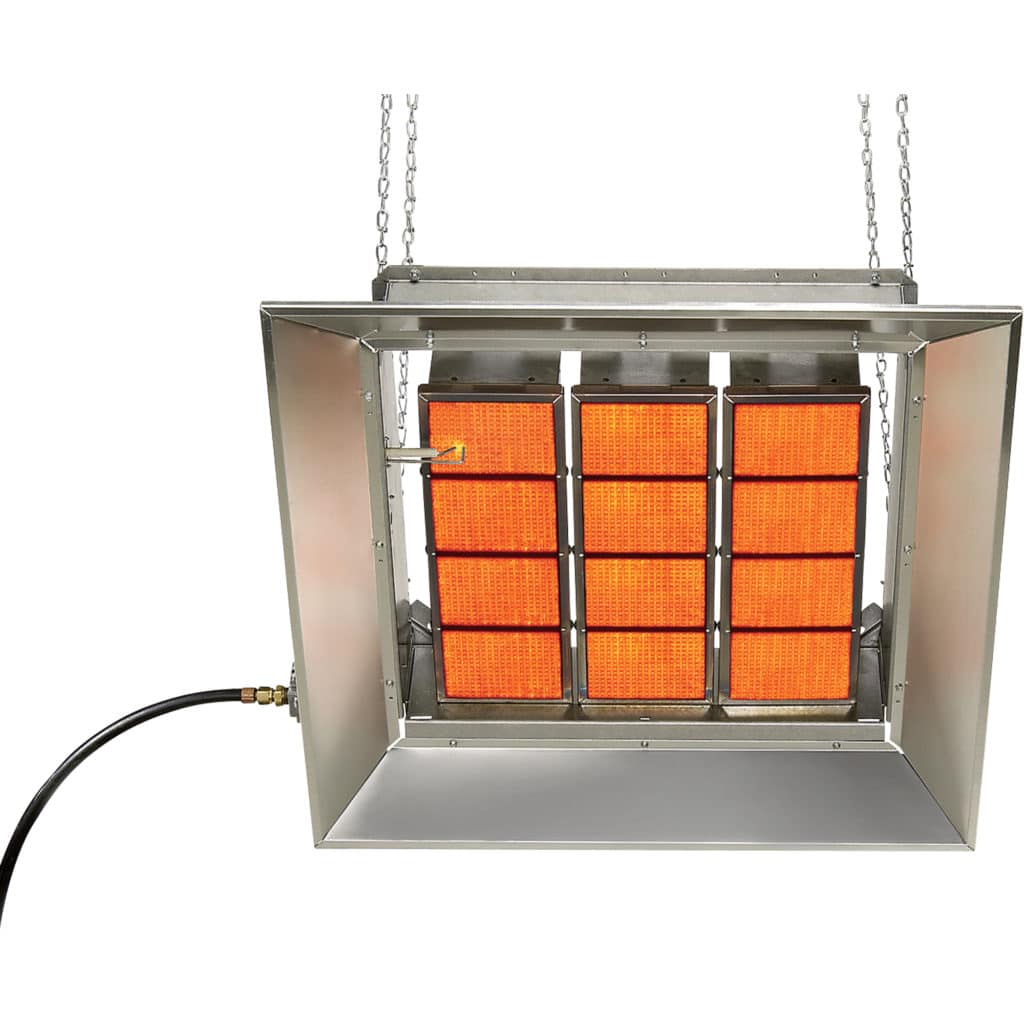
overhead-infrared-propane-garage-heater-1-1024x1024.jpgRadiant Garage Heaters

Radiant heaters can use electricity or natural gas using polished reflectors that radiate infrared heat. There is no blown air inside the garage, unlike forced air heaters. Because a radiant heater does not blow sawdust about, woodworkers love them.

A separate circuit may be required if the device is electrically powered.

Radiant heaters provide steady heat and, as previously mentioned, do not blow air. Radiant heaters heat objects more than air. You may notice that your body is warm, but the cupboard tools are cold when you use a forced-air unit. Radiant heaters will heat everything! Although they are more costly to install than forced-air, they are also cheaper to run monthly.

Heater Installation

Gas-powered Heaters

Mounting the unit on the ceiling opposite your garage doors is the most popular method. It isn't in the way, it's not a distraction, there are no cords that can trip over, and your head won't bang. 

You can mount the unit in three ways:

1. Horizontal air delivery perpendicular to joints

2. Vertical air delivery - Recessed between the joints

3. Horizontal air delivery parallel to Joists

The heater can also be wall-mounted. 

You will need to consider the following factors when choosing a set-up:

· Installation of electric power and gas lines

· Clearance of combustible material and access to service

· If necessary, plans for venting

· Assessment of fire hazards, including the proximity to neighbouring houses

Air Conditioning Edmonton will advise you on all aspects of garage heating.

Electric heater installation

You can mount electric heaters to a garage ceiling or wall. You can also install the heater yourself. You should know that electric heaters use more power and may need a separate circuit. Electric heaters can be costly in Edmonton, where natural gas heating is more affordable.

What is the cost of a garage heater?

Garage heaters are a luxury that will not add value to our homes. Natural gas units tend to be more expensive than electric units. Natural gas is usually more efficient than electricity and costs less to run.

Natural Gas Powered Units

Prices for the best units range between $2,400 and $5,400. Prices depend on whether permits are required and how much custom gas work is required, such as venting and piping.

The monthly gas cost for operating costs is only $15-20 per month. You could heat your vehicles year-round for as little as $20 per month in heating costs.

The location and the fees will affect the utility rates.

Electric-powered units

An electric garage heater costs anywhere from $400 to $1,000+. Although homeowners can install them, larger units will require an electrician to run the electrical.

Expect to pay $100 per month in the colder months for keeping your garage warm in the winter.

Summary: Which Garage Heater is Best?

All you need is information, including the costs and requirements. Air Conditioning Edmonton can help you navigate and fine-tune your options. You can call Air Conditioning Edmonton if you are ready to start, especially if your garage is unheated and uninsulated.

https://air-conditioning-edmonton.ca/which-garage-heater-is-best/

How to Replace a Furnace

Gas and Oil furnaces are a wonderful addition to have in any home or business. They heat the rooms they go into completely, are easy to control from one central location and even help clean the air in the home or business they are working in. They also have a reputation as being very durable and needing very few repairs. With that being said, they do not last a lifetime and occasionally need to be replaced. Replacing a furnace is not as easy as one would think either and there are steps you need to take so you know how to replace a furnace properly. Here are some important things to consider when replacing your furnace.

Cost

Of course when you are shopping for a new furnace you must consider the cost. You may wish to have the fanciest furnace out there that is made but if it does not fit your budget or financing then you obviously cannot purchase that model. Try not to only emphasize cost when making a new furnace purchase.

Compatibility

Another important thing you need to know if you want to know how to replace a furnace is the compatibility of the new unit with the old one. Any new model you will purchase will have to fit in the same space as the old one. You will also need to have the new furnace use the same fuel as the old furnace; if the old one used natural gas the new one must use the same or you will have to go to the expense of adding a new fuel line.

Warranty

You don’t want to make a higher end purchase of something like a furnace and then have to worry about putting money into right away if you have a problem with it. So an important part of knowing how to replace a furnace is selecting a brand that has a warranty that will cover the product for several years.

Sophistication of the Unit

You may want to consider getting fancier controls with your new model such as being able to control the temperature in individual rooms or being able to program the furnace to come on and off several times a day.

The Company you are Purchasing From

Make sure you buy your new furnace unit from a company that has an excellent reputation in your area. You don’t want to have problems with the installation, promises that are not met or have problems with warranty service when you need it.

Speed of Installation

This could be a huge factor if your furnace stops working in the dead of winter. You will need to get it replaced as soon as possible. So if you have two units that you are looking at that you like then maybe your decision is made by the one that can be installed by the company the fastest.

Now you know how to replace a furnace; just be sure to consider all of these things before buying a replacement furnace.

No Obligation Estimate:

When it comes to HVAC systems, put your trust in us to deliver the best quality services along with top quality products to make your system work in an energy efficient and environmentally friendly order. Call us today at 780-800-7010 for a no obligation estimate.


https://air-conditioning-edmonton.ca/how-to-replace-a-furnace/

Residential HVAC Company Forms Partnership

A residential HVAC company announced the commencement of a service partnership with local firm Capital Plumbing & Heating. The partnership offers access to 24-hour emergency repairs and industry-leading HVAC services in the city and across northern and central Alberta.

Edmonton, Alberta residential HVAC & plumbing firm Air Conditioning Edmonton announced that it has forged an industry partnership with Capital Plumbing & Heating. The partnership extends the company’s service area and expertise to cities and towns across northern and central Alberta.

More information about the partnership and Air Conditioning Edmonton is available at https://air-conditioning-edmonton.ca/

The partnership leverages the concomitant capabilities of both companies, providing customers with access to industry-leading installations, tune-ups, inspections, repairs, and maintenance for residential air conditioning units, furnaces, boilers, and HVAC systems. The company’s service philosophy focuses on the safety, environmental responsibility, and energy efficiency of HVAC systems.

The Air Conditioning Edmonton-Capital Plumbing & Heating partnership consolidates the collective expertise of the licensed plumbing, heating, and HVAC professionals from both firms. The collaboration between the two firms is set to provide a wider range of services including the servicing of water heaters, plumbing fixtures, furnaces, boilers, and HVAC systems. The firm also offers water and drain inspections, cleaning, water heater safety and corrosion testing, as well as water treatment services and 24-hour emergency services.

According to a spokesperson for Air Conditioning Edmonton, “Capital Plumbing & Heating is truly committed to providing Edmonton homeowners with the best care possible. Our partnership with is a natural progression of our growth strategy, given that both firms share a commitment to service excellence and customer delight. They deliver an unparalleled standard of excellence, which ensures our customers have the comprehensive plumbing, cooling, and heating services they need at competitive prices."

Capital Plumbing & Heating is a full member of Plumber’s Success International, a residential plumbing contractors’ association and a trusted provider of plumbing and HVAC solutions in and around the city of Edmonton. Capital Plumbing & Heating is also located in Edmonton and was established in 2001. More information and a free estimate are available over the phone at 780-800-7010 and at the URL above.

https://air-conditioning-edmonton.ca/residential-hvac-company/